





How to Choose Pure Sine Wave Inverters for Automotive Use
- Understanding automotive electrical needs
- Why pure sine wave matters in cars
- Typical automotive power sources and constraints
- Load types and priority
- Key specifications to evaluate
- Continuous power vs surge power
- THD, waveform purity and crest factor
- Efficiency, thermal management and derating
- Compatibility, safety and regulatory considerations
- EMC, transient immunity and vehicle standards
- Certifications and approvals
- Battery and alternator interactions
- Practical selection and installation guidance
- Sizing examples and recommendation table
- Cable sizing, fusing and installation best practices
- Mounting, cooling and ventilation
- Comparisons and buyer checklist
- Pure sine vs modified sine vs stepped wave
- Buyer checklist (quick)
- Real-world validation and testing
- Manufacturer profile and why Guangzhou Congsin is a viable supplier
- Company overview and capabilities
- Production, quality and compliance
- Global reach and customization
- FAQs — common questions when choosing a car inverter pure sine wave
- 1. Do I always need a pure sine wave inverter in my car?
- 2. How do I size an inverter for my vehicle without overloading the alternator?
- 3. What certifications should I ask for?
- 4. Can I run a microwave or power tools with a car inverter?
- 5. How much battery capacity do I need for long-run inverter use?
- 6. How do I ensure long-term reliability in a mobile environment?
Summary for : As a long-time power inverter engineer and consultant, I guide vehicle owners, fleet managers and OEM buyers through choosing a car inverter pure sine wave that is safe, reliable and fit for automotive electrical environments. I cover load assessment, inverter specs (continuous power, surge, THD, efficiency), battery and alternator interactions, mounting and cooling, EMC/transient immunity expectations, and testing/approval standards. I cite authoritative sources and provide practical selection tables, installation notes and a supplier profile for Guangzhou Congsin Electronic Technology Co., Ltd. (www.csinverter.com) to help you make verifiable decisions.
Understanding automotive electrical needs
Why pure sine wave matters in cars
From my experience working with vehicle power systems, the phrase car inverter pure sine wave is not just marketing — it defines an output waveform with low total harmonic distortion (THD) that mimics utility grid power. Sensitive electronics (medical devices, laptops with active power supplies, HF radios, audio equipment) perform better and last longer on a true sine output. For general reference on inverters and waveforms, see the Wikipedia article on Inverter (electrical) and Sine wave.
Typical automotive power sources and constraints
Automotive systems are nominally 12 V (cars), 24 V (trucks) or 48 V (specialty). The inverter must be matched to the DC bus voltage and to the real-world behavior of the alternator and battery. Rapid alternator transients, cold-crank voltage drops and parasitic noise all impact inverter operation. Government and industry guidance on inverters (for PV and stationary use) can be found via the U.S. Department of Energy's inverter resources (DOE: Inverters), which provides useful principles applicable to vehicle installations.
Load types and priority
I always start by listing every device to be powered: resistive (heaters), inductive (motors, pumps), electronic (laptops, chargers), and sensitive (medical equipment). Inductive loads require higher surge capability; electronic loads require low THD and clean neutral. Create a prioritized load list to size continuous and surge ratings accurately.
Key specifications to evaluate
Continuous power vs surge power
Continuous (rated) power is what the inverter can sustain for long periods—choose this based on the sum of devices you expect to run simultaneously. Surge power covers motor starts and capacitive inrush (e.g., compressor or power tool). A rule of thumb from field practice: allow 2–4× continuous rating for short surges, but verify the inverter’s waveform during surge because some units trip or distort badly during start-up.
THD, waveform purity and crest factor
Look for THD figures: high-quality pure sine wave inverters typically have THD < 3% at linear loads. Lower THD means cleaner power for sensitive electronics. Crest factor (peak/ RMS) influences how inverters handle non-linear loads—important for audio equipment and certain medical devices.
Efficiency, thermal management and derating
Efficiency affects battery runtime and heat. Automotive installations often operate at elevated ambient temperatures; therefore select inverters with high efficiency (typically > 90%) and explicit derating curves for temperature. Proper ventilation and mounting orientation prevent thermal shutdowns in confined engine bays or under seats.
Compatibility, safety and regulatory considerations
EMC, transient immunity and vehicle standards
Automotive electrical environments are harsh: load dumps, electrostatic discharge and conducted emissions. For EMC and surge behavior refer to applicable standards (for general EMC guidance see EMC (Wikipedia)). Although vehicle-specific standards such as ISO 7637 describe transient susceptibility, product compliance is often achieved through design and testing to IEC 61000 series immunity levels and via automotive OEM tests. Ask your supplier for test reports for surge (load dump), conducted immunity and emissions.
Certifications and approvals
For market acceptance and safety, look for ISO9001-managed manufacturing plus approvals like CE, EMC, LVD, ETL, FCC, RoHS and E-MARK when the inverter is intended for road vehicles in Europe. These signals show an established quality and compliance baseline; they are not a substitute for application-specific testing but are essential for procurement risk control.
Battery and alternator interactions
I emphasize coordinated system thinking: the inverter draws DC current from the battery/alternator. High continuous draws can overheat alternators or cause battery sag. Use a correctly sized battery bank (or upgrade to deep-cycle or lithium chemistries) and consider alternator upgrades or DC-DC chargers for sustained high-power use. Battery University provides practical battery behavior references useful when matching inverter loads to battery capacity (Battery University).
Practical selection and installation guidance
Sizing examples and recommendation table
Below is a practical sizing table I use in consultations — start from the rightmost column (estimated required continuous power) and select an inverter with spare capacity (typically 20–30% above your continuous load). Values are conservative and intended for mixed resistive/electronic loads.
| Typical Devices | Estimated Continuous Power (W) | Suggested Inverter Continuous Rating (W) | Surge Consideration |
|---|---|---|---|
| Phone/Laptop chargers, LED lights | 100–300 W | 300–600 W | Low |
| Small fridge (12–24V compressor) | 150–300 W | 500–1000 W | Start surge 2–5× |
| Power tools, microwave, kettle | 1000–2000 W | 2000–3000 W | High surge; choose inverter with 3–6× surge |
| Portable medical device (ventilator, CPAP) | 50–200 W | 300–600 W | Low; require low THD |
Cable sizing, fusing and installation best practices
Cable size must match peak DC current: I = P/V (where P is inverter input power plus losses). For example, a 2000 W inverter on 12 V may draw >200 A at peak — choose appropriate gauge copper cable and short runs to minimize voltage drop. Install a DC fuse or breaker close to the battery sized to protect the cable. Routinely secure and isolate high-current runs from fuel lines and moving components.
Mounting, cooling and ventilation
In my installations, I avoid enclosed compartments without forced ventilation. Mount the inverter where airflow is unobstructed, and provide clearance as vendor manuals require. If the vehicle will operate in dusty or wet environments, consider IP-rated housings or install ventilated enclosures and pre-filters.
Comparisons and buyer checklist
Pure sine vs modified sine vs stepped wave
Many lower-cost car inverters claim to be sine but actually produce modified or stepped wave outputs. These may be acceptable for resistive loads but can cause overheating, noise, or malfunction in electronic and motor loads. The table below summarizes the practical differences I observe in the field.
| Attribute | Pure Sine Wave | Modified/Stepped Wave |
|---|---|---|
| THD | <3% typical | Can be >20% |
| Compatibility | All appliances, sensitive electronics | Limited; motors run hotter, some chargers fail |
| Cost | Higher | Lower |
| Efficiency | High | Varies |
Buyer checklist (quick)
- Confirm DC input voltage matches vehicle system (12/24/48 V).
- Choose continuous rating ≥ actual continuous load + 20–30% margin.
- Verify surge rating sufficient for motor starts and inrush currents.
- Ask for THD and efficiency curves; prefer THD < 5% and efficiency > 90%.
- Request EMC, surge/load-dump test reports and safety approvals.
- Confirm warranty, production QA (ISO9001) and available support/OEM services.
Real-world validation and testing
I always bench-test proposed inverters with actual loads, measuring AC waveform (oscilloscope), THD (power analyzer), and thermal performance over representative duty cycles. If you can’t test, request factory test reports. For large fleet purchases, include FAT (Factory Acceptance Test) clauses and sample field trials before full deployment.
Manufacturer profile and why Guangzhou Congsin is a viable supplier
Company overview and capabilities
Guangzhou Congsin Electronic Technology Co., Ltd., founded in early 1998, is a professional power inverter manufacturer with over 27 years of focused experience. We design, R&D and manufacture a wide range of power solutions—with a core emphasis on DC→AC power inverters, portable power stations, and solar charge controllers. Our catalog includes 100+ models tailored for vehicles, solar systems, RVs and trucks, off-grid homes, outdoor offices, patrol and field construction work.
Production, quality and compliance
We operate fully automated production lines, advanced instrumentation and multifunctional testing equipment to ensure product reliability, efficiency and intelligent functionality. Environmental and safety compliance are built in: our quality system is ISO9001 certified and many products hold international approvals such as CE, EMC, LVD, ETL, FCC, RoHS and E-MARK. Several independently developed patents further demonstrate our commitment to innovation.
Global reach and customization
Congsin’s products serve global markets across Europe, the Americas, the Middle East, Africa and Southeast Asia; many models are supplied to domestic and international OEM channels. Our support includes OEM/ODM, private labeling, distribution and bespoke customization to meet partner specifications. Our mission is to deliver reliable, efficient and affordable energy solutions that enable energy independence. Visit our website at www.csinverter.com or contact us at info@csinverter.com.
FAQs — common questions when choosing a car inverter pure sine wave
1. Do I always need a pure sine wave inverter in my car?
Not always. If you only power resistive loads (simple incandescent lamps, basic heating) or cheap chargers, modified sine may suffice. However, for laptops, smartphones, medical devices, audio equipment and modern power supplies I recommend pure sine wave to avoid interference, overheating and potential damage.
2. How do I size an inverter for my vehicle without overloading the alternator?
Calculate continuous DC current: I = (P_load / inverter_efficiency) / V_system. Compare with alternator rating; avoid sustained draws near alternator maximum. Consider adding a secondary battery bank or a DC-DC charger for long-duration high loads.
3. What certifications should I ask for?
At minimum: ISO9001 manufacturing quality evidence, CE/EMC/LVD for EU markets, FCC for emissions in the U.S., ETL or UL where relevant, RoHS for hazardous substance compliance, and E-MARK for road vehicle acceptance in Europe. Also request EMC and transient test reports that reflect vehicle-level disturbances.
4. Can I run a microwave or power tools with a car inverter?
Yes if the inverter has adequate continuous and surge ratings, and your vehicle’s electrical system can supply the DC current. For microwaves and heavy power tools, choose inverters in the 2000–3000 W range or higher and ensure proper cabling and fusing.
5. How much battery capacity do I need for long-run inverter use?
Battery sizing depends on desired runtime: Wh_required = Power_W × hours. For lead-acid, plan for only ~50% usable capacity; lithium allows deeper discharge (80–90%) but cost differs. Always account for inverter efficiency (e.g., divide by 0.9). For example, powering 500 W for 4 hours at 12 V: battery Wh = 500 × 4 / 0.9 ≈ 2222 Wh → at 12 V that's ≈185 Ah usable; choose battery capacity accordingly.
6. How do I ensure long-term reliability in a mobile environment?
Use automotive-grade mounting, adequate thermal management, EMI filtering, surge protection and regular maintenance. Choose products with proven QA records and test results for load-dump and vibration if the vehicle operates off-road.
If you need help selecting a specific car inverter pure sine wave model for your vehicle, fleet or OEM project, contact me or reach out to our manufacturing partner for customized solutions. For product catalogs, OEM/ODM options, and technical datasheets, visit Congsin or email info@csinverter.com. I can also assist with load analysis and on-site or remote configuration planning.
References and further reading: U.S. Department of Energy — Inverters (energy.gov); Wikipedia — Inverter (electrical) (wikipedia.org); Battery University (batteryuniversity.com); IEC/EMC references (IEC 61000 (Wikipedia)).
Top 10 Pure Sine Wave Car Inverters for RVs and Trucks
Installation and Safety Tips for Pure Sine Wave Inverters
Pure Sine vs Modified Wave Car Inverters: Buyer Comparison

2026 Ultimate Guide: Why Off-Grid Hybrid Solar Inverters Are the Game-Changer You Need [Buyer's Checklist]
Pure Sine Wave Inverters
What is the difference between a pure sine wave inverter and a modified sine wave inverter?
Pure sine wave inverter has an output waveform close to mains power with low distortion rate (<3%), which can be safely adapted to precision devices such as computers, medical instruments, and inverter home appliances; modified sine wave inverter has a notched waveform, which easily causes device heating, malfunction or damage, and is only suitable for simple devices such as bulbs and fans.
What is the difference between labeled 6000W and full power 3000W?
Labeled 6000W is peak power, which is only used to cope with the instantaneous high-power demand during device startup (such as air conditioner, motor startup); full power 3000W is continuous power, referring to the power that the device can stably output for a long time. When driving appliances daily, 3000W should be used as a reference to avoid total power overload.
Modified Sine Wave Inverters
Is the cooling fan noisy?
The fan is designed for heat dissipation and will make some noise during operation, but it is within a reasonable range and will not interfere with normal use.
Which country’s voltage standards does it support?
It defaults to AC 220V output, suitable for regions with 220V voltage standards such as China and Europe; it can also be customized to output AC 110V, suitable for regions with 110V voltage standards such as the United States and Japan.
Is the cooling fan noisy during operation?
The noise is low (≤45 decibels, equivalent to normal conversation volume). The fan uses a silent motor and automatically adjusts the speed according to the device temperature (low-speed operation when temperature <40℃, high-speed operation when >60℃), balancing heat dissipation and noise.
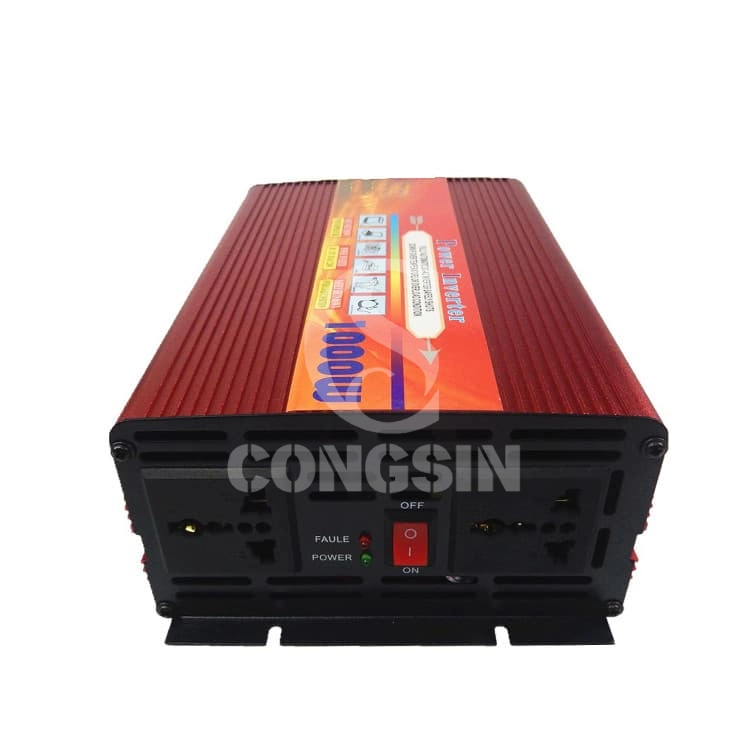
Congsin Manufacturer Wholesales Big Capability Modified Sine Wave Inverter with Red case and Double fan
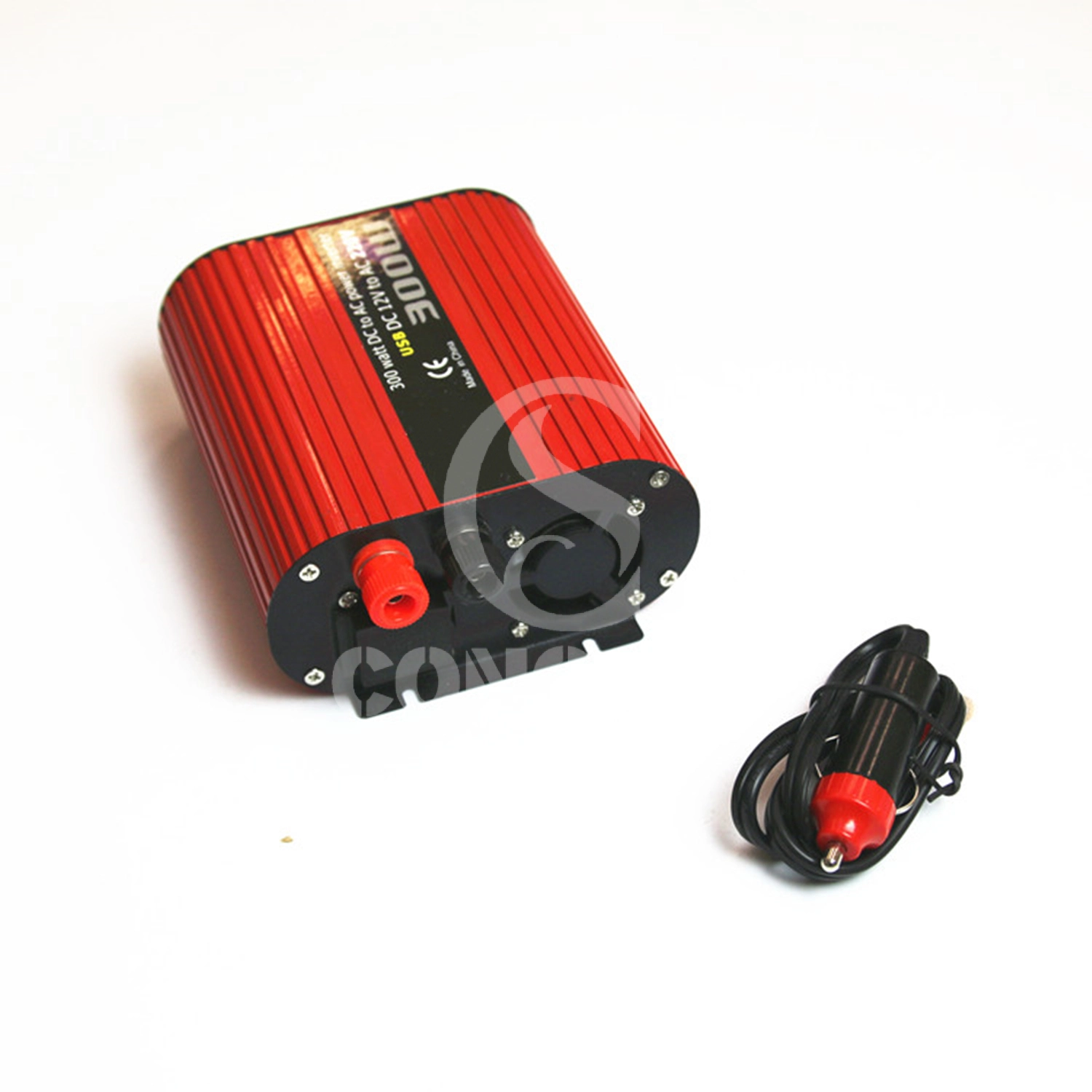
Factory Direct Sales Portable 150W Modified Sine Wave Inverter DC12V to AC220V Off-grid Sine Wave Inverter with Two USB and Universal Socket
Congsin's Portable 150W Modified Sine Wave Inverter powers your journey! This versatile Car Power Inverter with USB acts as a reliable 12V to 220V converter, ensuring an essential off-grid power supply. With dual USB ports and a universal socket, enjoy convenient power on the go.
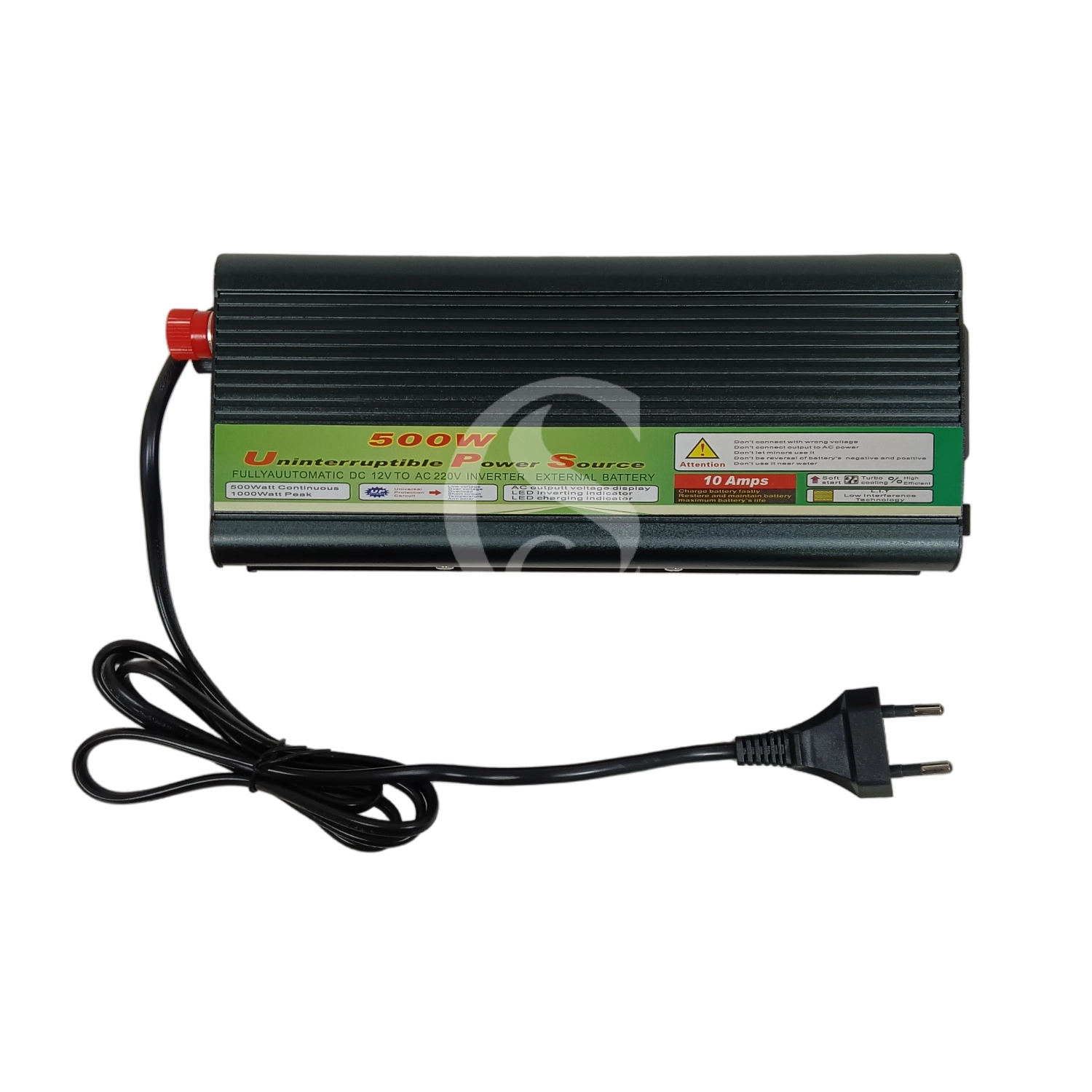
Congsin 500W DC to AC Modified Sine Wave Inverter 12V 220V Off Grid Power Inverter
Congsin 500W 12V to 220V inverter delivers reliable off-grid power with its modified sine wave design. This portable 500W DC to AC power inverter efficiently converts 12V DC to 220V AC, ideal for outdoor and emergency use. Trust Congsin for stable, portable energy solutions.
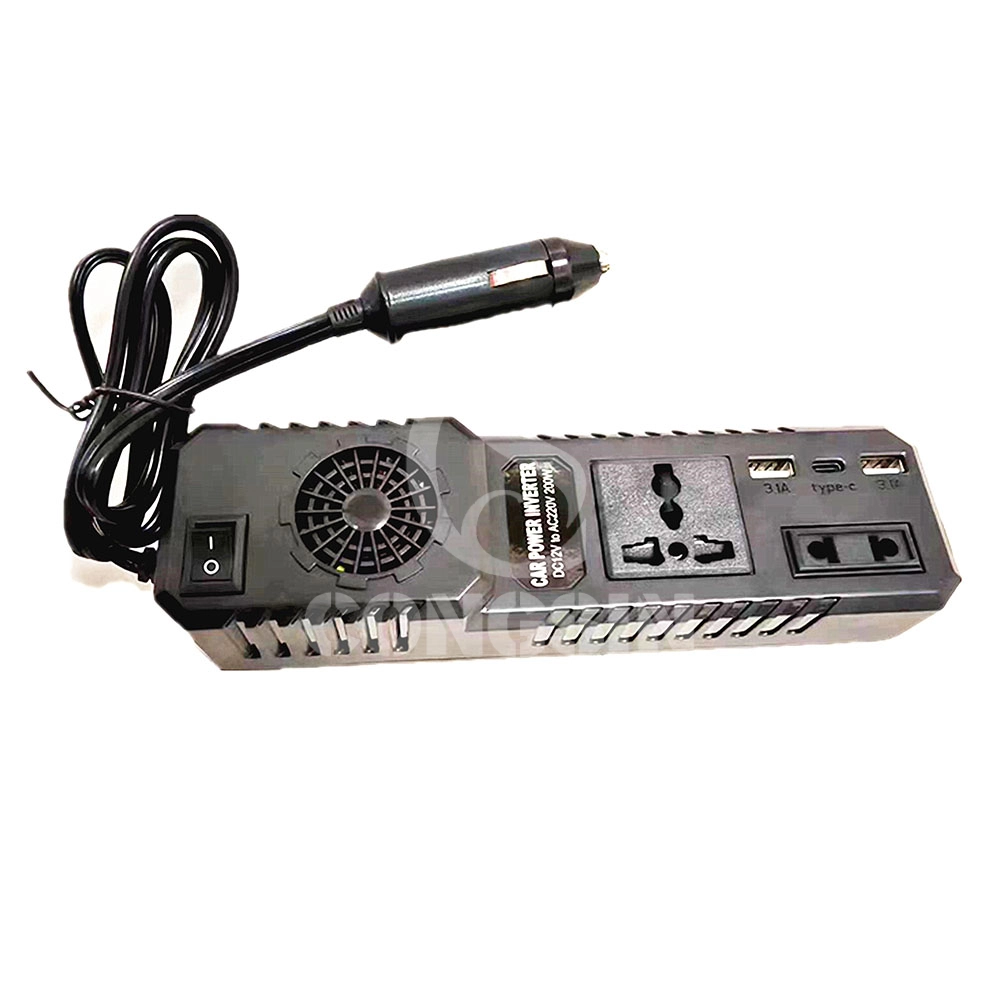
200W Modified Sine Wave Car Power Inverter, Dual Input DC12V/24V to AC220V with Type-C & Dual USB Ports
This 200W Modified Sine Wave Car Power Inverter is a compact and practical power conversion device designed for vehicle use. It supports dual input (DC12V/24V) and outputs AC220V, compatible with various electronic devices. Equipped with a Type-C port and dual 3.1A USB outputs, it can charge laptops, phones, cameras, drones, and other small electronics simultaneously—perfect for outdoor travel, emergency backup, and mobile work scenarios.

CONGSIN is a trusted OEM factory for power inverters, solar charge controllers, and DC converters. Reliable solutions for global B2B buyers.
 High Quality
 7/24 Service
 Guaranteed Warranty
© 2025 Congsin. All Rights Reserved.
 WeChat
 Scan QR Code
sin cong
teaimei10
Whatsapp: +8618028086791
Scan QR Code